| | | Contents
- Celebrating 65 Years of NAP
- NAP annual report 2025
- Recap of our Networking Meeting – February 5, 2026
- Remember to apply for the MEP Course
- Join the NAP Innovation Challenge
- NAP SIG Project Management invites new member companies
- Professorial Considerations #7
- SIG Energy Transition visits Gasunie
- NAP participant in the spotlight - Tim Hartzema
- Follow us on LinkedIn
- Events Calendar
| | | | | Celebrating 65 Years of NAP | | | | On the 19th of November 2026, we bring together the entire value chain of the Dutch process industry and equipment manufacturing during the NAP Anniversary Congress in Amersfoort. In a volatile world, meeting in person, engaging in open dialogue, and strengthening collaboration are more important than ever.
With three inspiring keynote speakers, a prestigious award recognising innovation within the sector, and ample opportunity for informal networking, this promises to be a day that offers direction and stimulates further development. Be sure to mark the 19th of november in your calendar.
It is precisely when our environment changes faster than we do that the true strength of a network becomes clear. | | | | Celebrating NAP’s 65th anniversary with a dedicated page following this year’s activities, meetings, congress, and prices.
During the following period you’ll find the planning, date’s, information and a look back at the 65 years connected.
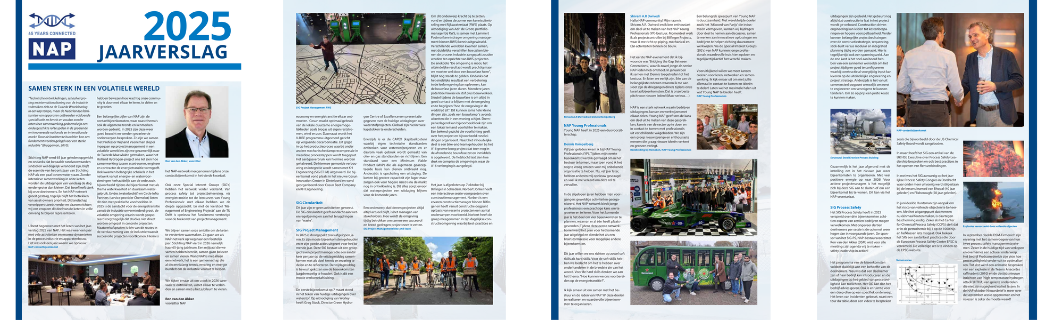
Take a look | | | | | 2025 was once again a year marked by activity and momentum within the process industry and equipment manufacturing sector. It was a year in which we learned together, shared knowledge, and continued to build a strong and connected community.
In the 2025 annual report, we present an overview of what we achieved together throughout the year:
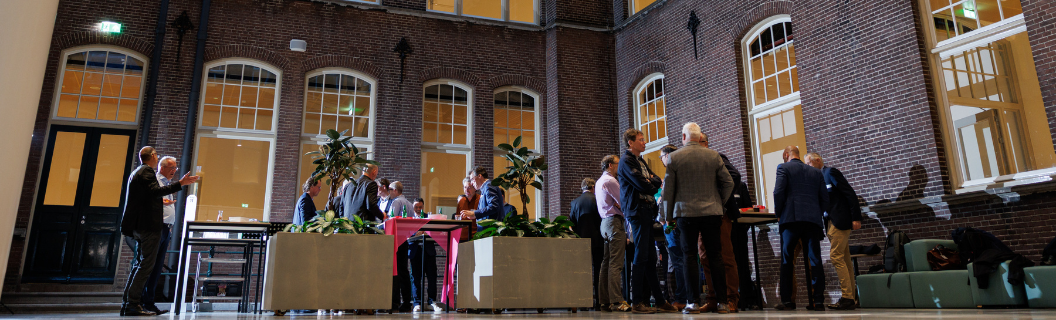
As we look ahead to our 65th anniversary in 2026, we reflect with pride and with confidence in the future. For decades, NAP has been a community where knowledge, experience and energy are combined to help advance the industry. | | | | Recap of our Networking Meeting – February 5, 2026 | | | | Last Thursday, we came together at Haskoning during the NAP contact meeting, located in a beautifully renovated national heritage building from 1912, which once housed the Faculty of Mining Engineering. An inspiring setting for a timely and urgent topic: 𝗴𝗿𝗶𝗱 𝗰𝗼𝗻𝗴𝗲𝘀𝘁𝗶𝗼𝗻 and its impact on industry, where waiting times for connection to the electricity grid can sometimes extend for many years.
We listened to several speakers who translated this challenge into opportunities and potential solution pathways. The first contributions approached the issue from the perspective of an energy supplier.
Wiert Jan de Raaf(Manager Energy Transition Partnerships) andGijs-Jan Otten(Strategic Partner Manager) from Eneco took us along in their presentation Energy Transition in Challenging Times. They shared their vision on how smart energy management, including power-to-heat, can help cope with the challenges of grid congestion and price volatility.
As the final speaker,Edward Pfeiffer, smart energy hubs specialist at Haskoning, addressed the elephant in the room when it comes to CO₂ emissions: industry. With a share of 40% (55 Mt in 2015), this is a crucial sector. Although reduction plans such as CCS, hydrogen, residual heat utilisation and electrification are expected to lower emissions, the projects currently projected are not sufficient to meet the 2035 target.
We look back on an inspiring day of knowledge exchange and connection. Many lively conversations took place, and we saw a great deal of engagement and enthusiasm. | | | | Remember to apply for the MEP Course | | | | On Friday, May 29th, the Management of Engineering Projects course at TU Delft will start again. This is an intensive course for young engineers from the participating companies which is highly regarded and taught on five consecutive Fridays in May and June in the English‑language. The course is intended for engineers at HBO/Bachelor and WO/Master level with a maximum of seven years of project experience in the process industry, energy sector and/or infrastructure sector.
This unique course offers young engineers the opportunity to learn the ins & outs of project management in an interactive way. Prof. Dr. Wijnand Veeneman, together with guest lecturers from the university and professional field, guides participants through all phases and aspects of projects, and enables them to apply the knowledge gained in an engaging case study. Prof. Hans Bakker’s book “Management of Engineering Projects – People are Key” serves as the guiding framework for the course. Because it is an intensive program, students are expected to spend approximately eight hours per week on self‑study in addition to the Friday sessions, in order to make effective use of the available time.
Registration is now open and the first applications have already been received. More information is available at our website. | | | | Join the NAP Innovation Challenge | | | | To mark the 65th NAP anniversary, we are launching a new innovation competition focused on smart collaboration and forward‑thinking solutions for the Dutch process industry.
The sector is changing rapidly, with challenges such as grid congestion, sustainability demands and stricter regulations. We invite companies, students, professionals and knowledge institutions to share innovative concepts, products, services or collaboration models that can help shape a future‑proof industry.
Why Participate?
- Contribute to real industry challenges
- Gain visibility within the NAP network
- Compete for an exclusive dinner with the jury and a presentation slot at the NAP anniversary event
Key Deadlines
- 15 May 2026 – Submit a half‑page concept
- 1 October 2026 – Poster submission (A1, digital)
- 19 November 2026 – Live pitches & award ceremony
Full details and participation guidelines are available on our website.
We look forward to your ideas! | | | | NAP SIG Project Management invites new member companies | | | | Within NAP, several Special Interest Groups (SIGs) are active. One of these focuses on project management, with the aim of facilitating knowledge exchange and sharing practical experience among participating companies. The SIG is centred on inspiration and hands-on insights drawn from daily practice.
The participating companies represent the entire value chain: end users, contractors, engineering firms and suppliers. It is precisely this diversity that generates new insights and unexpected perspectives. Participants benefit not only from learning alongside peers within their own organisation, but also from engaging with partners upstream and downstream in the chain.
Three to four times a year, meetings are organised around a project-related theme or in the form of a site visit. Each session offers fresh perspectives as well as the opportunity to further expand your professional network with like-minded experts. Meetings are generally held on Friday afternoons, providing a valuable and inspiring close to the working week.
Join the NAP SIG Project Management and nominate one or two representatives from your organisation. In doing so, you will benefit from inspiring sessions and valuable exchange across the value chain.
If you have any questions, please feel free to contact the NAP Secretariat. | | | | Professorial Considerations #7 Running projects is, for a large part, about organizing resources. We define the scope, estimate the costs, make a schedule, and then figure out what we’ll need to deliver. After that, we organize how to actually make those resources available. We call that process contracting and procurement.
The essence of a project is that, as an organization, we don’t have those materials (or people) in-house, so we need to procure them. It all started off in earlier times when organizations organised most resources internally; when companies did almost everything themselves, from technology development to cleaning services, from operations to catering, and even construction.
Long ago, my grandfather would cut down trees on his own land, saw them into planks, build a shed, keep cows in it, and sell the milk. The Dutch Railways, where my other gradfather worked owned a construction company, advertising agency, maintenance teams, design bureau, and more. The predecessor of DSM-Firmenich in Delft, around the corner where I live, housed its own workers. This ongoing specialization has been vital to our economic success, as a country, and as individual companies.
At the same time, specialization comes with rough edges. There’s friction in organizing collaboration with others. Interfaces become tricky. How do we get what we need into the minds and hands of someone else, someone who doesn’t fully know our objectives, processes, people, or culture, and who aims to make a profit from us? How do we make sure that person, team, department, or organization truly understands what we require?
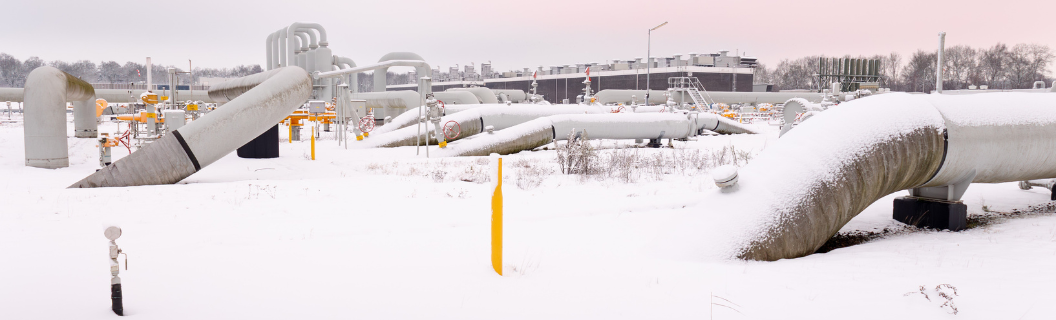
That same kind of friction also exists internally. The same mechanism appears between people with different roles. The people from procurement are not always fully aligned with those from technology, and operations not always with project management. Those edges can be just as rough. | | | | | SIG Energy Transition visits Gasunie | | | | On 26 January 2026, the SIG Energy Transition was hosted by Gasunie in Ommen. The meeting focused on the “molecules” within our energy system. While public debate often centres on electrification and grid congestion, a significant transition is also taking place on the gas side of the system.
In Ommen, work is underway on the compression and conversion of natural gas, as well as preparations for hydrogen and the integration of green gas into the high-pressure network. In this way, the site plays an important role in the development of a future-proof gas infrastructure.
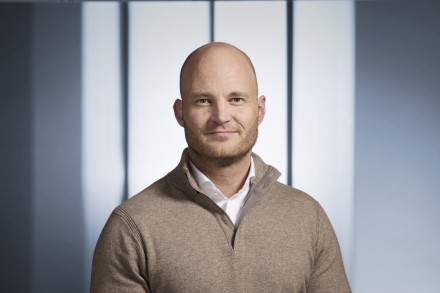
The meeting provided valuable insights into the molecular dimension of the energy transition. It became clear that the coherence between molecules and electrons is essential to achieving a reliable, affordable and sustainable energy system. | | | | NAP participant in the spotlight - Tim Hartzema | | | | Since last November, and naturally following the rigorous assessment of the admissions committee, I have had the privilege of succeeding Marc van der Zon as the representative of Tata Steel IJmuiden on the Programme Council of the NAP Foundation. I would like to take this opportunity to once again thank Marc for everything he has meant to Tata Steel, to NAP, and to me personally. My sincere thanks, Marc.
And what a (jubilee) year to join NAP. First, both the Board and the Programme Council are working diligently to finalise preparations for the Anniversary Congress in November. Second, the central theme of volatility, and the resulting need to further strengthen the existing value chain, directly reflects the core challenges facing Tata Steel in IJmuiden.
Anyone entering our site through the main gate is immediately confronted with a large countdown clock. It displays the remaining time until the agreed date by which the Customised Agreement must be signed by the Dutch government, by our parent company Tata Steel Ltd, and by us here in IJmuiden. The programme is called SCALE, reflecting our daily mantra: across every level of the organisation, we are working to meet all conditions required to secure what is arguably the most important agreement in the history of the former Koninklijke Hoogovens.
The reason for this introduction is the clear link with the volatility that runs parallel to this immense challenge a reality that, to a greater or lesser extent, affects everyone in our process industry today. From dynamic import tariffs and necessary reorganisations to transitioning to an entirely new organisational structure, and navigating the paradox between public opinion and operational reality, we are facing a volatile mix of circumstances. At Tata Steel, we continue to persevere, fighting for our licence to operate and for a green, circular future. In my admittedly slightly coloured view, this must include safeguarding primary basic industries within the Netherlands. In today’s global landscape, we simply cannot afford to become more dependent on others than we already are.
This is precisely why I am convinced of the added value, relevance and even necessity of this 65-year NAP coalition, especially at this moment in time. We can only navigate these unprecedented challenges in the process industry by joining forces and strengthening collaboration across the value chain.
And how do I personally keep a cool head and remain focused on the end goal in such a volatile environment? Quite simply, by striving to perform as effectively as possible within my own field of influence. In practice, this means delivering investment projects on time, within budget and to the required quality standards. The result is operational stability through the essential replacement of ageing installations, contributing positively to EBITDA and enabling continued investment in our IJmuiden operations. Naturally, many of our trusted partners are involved in these projects and they are well represented within NAP. This once again underlines that we are stronger together in a volatile world.
I look forward to meeting fellow NAP members in person and to contributing to even stronger collaboration across the value chain. | | | | | Tim Hartzema Sr. Manager/Business Executive at TATA Steel IJmuiden | | | | | Would you like to learn more and stay up to date with the latest news? Visit our LinkedIn page for recent updates. Here, you can follow not only NAP, but als DACE!

| | | | Events Calendar This year’s networking meetings have been scheduled. Be sure to mark the dates in your calendar or register straight away. Click here for the full activities calendar.
| | | | | | | | | | Stichting NAP · Berencamperweg 10 · Postbus 1058 · Nijkerk, 3861 MC · Netherlands
Copyright © 2021 Stichting NAP, All rights reserved. | | | | |