
SIG Energy Transition Visits Gasunie
24 februari 2026
On 26 January 2026, the SIG Energy Transition meeting took place at Gasunie in Ommen. The session focused on the molecules that keep our energy system running. While the energy transition debate often emphasises electrons — and the grid congestion challenges that frequently make the headlines — an equally profound transformation is underway on the gas side of the system. Ultimately, this development may prove to be at least as significant as the transition in electricity.
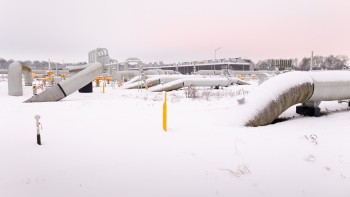
In Ommen, Gasunie is responsible for the compression of both high-calorific and low-calorific natural gas. Nitrogen is also produced at the site to convert high-calorific natural gas into Groningen-quality gas suitable for household use. At the same time, the location is preparing for the transition to hydrogen.
Ommen is situated along the Netherlands’ “natural gas highway”. Multiple pipelines pass through the station, enabling a gradual transition to hydrogen by repurposing existing pipelines step by step. In addition, Gasunie is actively advancing the green gas transition. The Dutch government has introduced mandatory blending of green gas, upgraded biogas of natural gas quality, into the gas system. This means that decentralised green gas production must be fed into Gasunie’s high-pressure network. To facilitate this, Green Gas Boosters (compressor stations) are being installed at various locations across the Netherlands to bring the gas to the required pressure.
Although hydrogen development is currently experiencing some delays — partly due to the slowdown of offshore wind projects that are expected to provide the necessary electricity — hydrogen remains an essential link in the energy transition. This is particularly true for high-temperature industrial processes and as an energy carrier to balance seasonal fluctuations in energy demand. Gasunie is therefore working on developing the full value chain, from intake and storage to transport. A safe, reliable, affordable and sustainable gas infrastructure remains central, today for natural gas and increasingly for hydrogen.
The meeting provided valuable insights into the molecular dimension of the energy transition. It became clear that this is a complex and far-reaching transformation across the entire value chain. The discussions also highlighted that electrification alone is not a silver bullet. It is precisely the interaction between molecules and electrons that can help reduce grid congestion and maintain a reliable, multi-carrier energy system, at the lowest possible cost and with maximum sustainability. The role of sustainable gases may well prove to be greater than currently anticipated.